
Kemono: What It Is, How It Works, and Everything You Need to Know
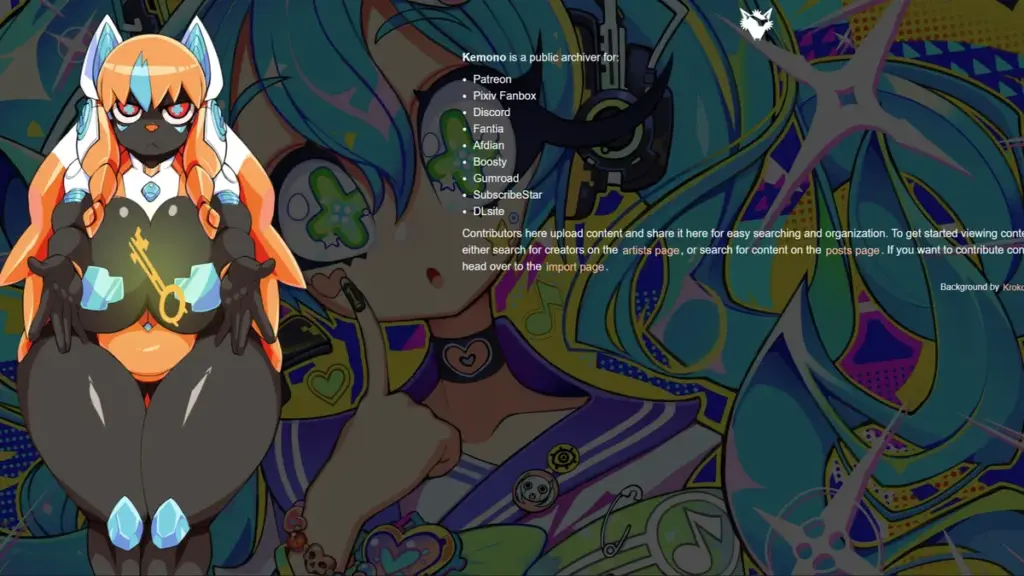
Kemono is a free, publicly accessible website that archives content from creator subscription platforms including Patreon, Pixiv Fanbox, Fantia, Gumroad, SubscribeStar, and Boosty. Anyone can browse, search, and download creator posts, artwork, and files without a paid subscription, through a community-powered importer system.
Whether you are curious about the Japanese meaning of the word, looking for information about how the platform operates, or researching creator economies and digital rights, this guide covers everything you need to know about Kemono from start to finish.
What Is Kemono?
Kemono is a community-operated public content archive. It does not produce or host original creative work. Instead, it stores copies of posts, images, videos, and downloadable files that were originally published by independent creators on paid subscription platforms.
The platform takes its name from the Japanese word kemono (けもの or 獣), meaning “beast” or “animal.” This reflects its origins in communities built around Japanese digital art, anime, manga, and anthropomorphic character design, which are the genres that shaped much of its early user base and archived content.
Kemono currently operates at kemono.cr. Before this, it ran under the domains kemono.party and kemono.su, with each migration driven by hosting pressures and technical circumstances. Despite the domain changes, the platform, its community, and its core function have remained consistent since 2020.
What Does Kemono Mean in Japanese?
The Literal Meaning
Kemono (けもの) is a traditional Japanese noun meaning “beast,” “animal,” or “wild creature.” Its kanji form (獣) emphasizes wildness and untamed nature, setting it apart from more neutral Japanese terms for animals like doubutsu (動物), which carries no such connotation.
The word appears throughout classical Japanese literature, folktales, and mythology. It often describes shape-shifting creatures, supernatural animals, and spirits known as yokai that exist at the boundary between the human and animal worlds.
Kemono in Anime, Manga, and Digital Art
In modern Japanese pop culture, kemono refers to a specific genre of anthropomorphic character design. Characters in this genre combine animal physical traits such as fur, ears, tails, claws, and muzzles with human bodies, emotions, and personalities.
The kemono art style is rooted in Japanese illustration traditions, meaning its aesthetics are shaped by anime and manga visual languages. It has a large, active, and international community of creators and fans who identify specifically with this style and its cultural origins.
Kemono Art vs. the Western Furry Fandom
Kemono art is frequently compared to the Western “furry” fandom, and the two communities share significant overlap. However, they are not the same.
Kemono art originates from Japanese illustration culture and uses anime-influenced visual conventions including softer lines, specific proportions, and character design principles common in manga. Western furry art comes from different traditions, including American animation and science fiction illustration, and uses distinct stylistic conventions.
Many creators and fans identify with both communities. Others maintain a strong preference for one over the other. Understanding this distinction matters because the Kemono platform’s name and early identity were shaped by the kemono art community specifically.
Why the Platform Is Named Kemono
When the platform launched in 2020, a substantial portion of its archived content came from kemono and furry artists publishing on Pixiv Fanbox, Patreon, and Fantia. The name signaled its primary audience clearly while remaining broad enough to encompass all creator content without restriction to one genre.
Kemono as an Online Platform
What the Site Looks Like
Kemono presents a clean, searchable web interface designed around discovery and browsing. The main navigation includes five primary sections:
- Creators: A full, searchable directory of all archived creator profiles. Users can search by name or username and filter results by platform.
- Posts: A reverse-chronological feed of the most recently imported posts across all creators and supported platforms, updated as new content is contributed.
- Discord: A dedicated section for archived Discord server content, organized by server name and individual channel.
- Importer: The tool used to contribute creator content to the archive. Requires a registered account to access.
- Account: User registration and login. Optional for browsing but required for importing content and saving bookmarks.
The Kemono homepage displays recently updated creators and the latest imported posts, functioning as a live activity feed showing what the community has contributed most recently.
What Content Kemono Archives
Kemono archives a wide range of creator-published content, including:
- Digital artwork, illustrations, and photography
- Comics and sequential art
- Written posts, creative writing, and creator updates
- Videos and animated content
- Downloadable files such as ZIP archives, Photoshop (PSD) files, PDF documents, and audio files
- Tier-locked posts originally restricted to paying subscribers
- Discord server messages, channel posts, and media attachments
Kemono does not archive live streams or real-time interactive content. It captures static posts and their associated file attachments as they exist at the time of import.
How Kemono Works
The Importer System
The central mechanism of Kemono is its community importer tool. The process works as follows:
Step 1. A user holds an active, paid subscription to a creator on one of Kemono’s supported platforms, such as a monthly Patreon membership or a Pixiv Fanbox subscription.
Step 2. That user visits the Kemono importer page and submits their session token, which is an authentication credential their browser stores when they log into the original platform. This token allows Kemono’s system to act on their behalf.
Step 3. Kemono’s backend uses the submitted session token to authenticate with the original platform and systematically retrieve all posts, attachments, and associated files from the creator’s page.
Step 4. The retrieved content is stored in Kemono’s database and immediately made publicly accessible on the creator’s Kemono profile page, organized chronologically.
The entire system depends on community participation. Kemono does not run a continuous automated scraper that imports every creator on every platform. If no subscriber chooses to import a particular creator’s content, that creator’s profile on Kemono will remain empty or outdated.
What the Importer Retrieves
When a successful import runs, Kemono collects:
- The full text of each post
- Embedded images and media files
- Downloadable file attachments linked within posts
- Post dates, titles, and metadata
Known Limitations of the Importer
The importer does not always function perfectly. Source platforms, particularly Patreon, periodically update their authentication systems, page structures, and API designs. When this happens, Kemono’s importer can break entirely for affected platforms until the underlying code is updated.
Users have reported that some imports capture only file attachments without post text, or fail for specific creator profiles even when the platform-level importer appears to be working. Content availability on Kemono is therefore uneven. Some creators have complete, up-to-date archives while others have partial or outdated profiles.
Browsing Kemono Without an Account
No account or registration is required to browse Kemono. All archived creator profiles, posts, images, and downloadable files are publicly accessible to any visitor. A free account, which requires only a username and password, is needed only to access the importer tool, bookmark creators, or submit manual import requests.
History of Kemono
Yiff.party: The Predecessor (2016 to 2020)
Kemono’s direct predecessor was Yiff.party, a content archiving website that began operating around 2016. Yiff.party used the same fundamental model: community members with paid creator subscriptions submitted session tokens, allowing the site to archive and publicly display creator content from Patreon and other platforms.
Yiff.party built a significant user base before shutting down in 2020, when its operators cited unsustainable hosting costs and infrastructure challenges as the reasons for closure. Its shutdown created an immediate gap that a portion of its community moved to fill.
Kemono.party: Launch and Growth (2020 to 2022)
Kemono.party launched in 2020 as an open-source successor to Yiff.party, rebuilt from the ground up with improved asynchronous scraping architecture and expanded platform support. Kemono extended its reach beyond Patreon to include Japanese creator platforms, particularly Pixiv Fanbox and Fantia, reflecting the community’s broader interests and the global reach of Japanese digital art culture.
The platform’s source code was published on GitHub, making the project open and auditable by the developer community and allowing outside contributors to participate in its development.
Kemono.su: Continued Operation (2022 to 2024)
The platform migrated to the kemono.su domain during this period and continued operating through community contributions. This phase was marked by intermittent technical outages, server instability, and increasing legal pressure as more creators and rightsholders filed DMCA takedown requests targeting their archived content.
Kemono.cr: Current Operation (2024 to Present)
As of 2024, Kemono operates under the kemono.cr domain. The platform continues to be maintained by its community, though it faces ongoing challenges. The importer infrastructure is intermittently unreliable, and certain ISPs in some countries block the domain, requiring users to access the site through a VPN. These issues reflect the platform’s contested status rather than its abandonment, as Kemono remains actively used and contributed to by its global community.
Supported Creator Platforms
Kemono archives content from eight creator platforms. The importer’s functionality for any given platform depends on that platform’s current authentication and API design, which can change whenever a source platform updates its systems.
| Platform | Primary Region | Content Type | Subscription Model |
|---|---|---|---|
| Patreon | Global | Art, video, writing, audio, exclusive posts | Tiered monthly membership |
| Pixiv Fanbox | Japan and Global | Illustration, comics, tutorials, updates | Monthly fan support tiers |
| Fantia | Japan | Artwork, photography, adult content | Fan club subscription tiers |
| Gumroad | Global | Digital downloads, design assets, courses | Per-product purchase or membership |
| SubscribeStar | Global | Art, writing, adult content, video | Monthly subscription tiers |
| Boosty | Russia and CIS | Art, writing, video, community posts | Fan subscription tiers |
| DLsite | Japan | Games, audio works, visual novels, comics | Per-product purchase |
| Discord | Global | Server messages, media, channel content | Free or paid server membership |
Importer support for individual platforms changes as source sites update their systems. Check the Kemono importer page for current platform availability before contributing.
Features of Kemono
Creator Search and Directory
Kemono maintains a searchable directory of every archived creator. Users can search by name or username and filter results by platform, making it straightforward to locate a specific creator regardless of which subscription service hosts their original content.
Each creator has a dedicated profile page that displays their full archive of imported posts in reverse chronological order, along with associated files and metadata.
Posts Feed
The Posts page presents a continuously updated, reverse-chronological feed of newly imported content across all creators and platforms. Users who prefer to browse by recency rather than search for specific creators can use this feed to discover freshly updated profiles and newly available content.
Discord Server Archives
Kemono’s Discord section stores archived content from creator-run Discord servers. This includes messages from individual channels, shared media and file attachments, and server announcements, contributed by community members who imported this content alongside other creator posts.
File Downloads
Wherever creator posts include downloadable attachments, Kemono stores and serves those files directly. This covers image files, ZIP archives, PDF documents, Photoshop PSD files, audio recordings, and video files, covering the full range of what creators distribute to their subscribers.
Free Browsing With No Account Required
All of Kemono’s archived content is publicly accessible without creating an account or paying any fee. Every creator profile, post, and attached file can be browsed and downloaded by any visitor. This is the defining characteristic that distinguishes Kemono from the subscription platforms it archives.
Optional Registered Account
Users who choose to register gain access to three additional features: the importer tool, the ability to bookmark specific creators and posts, and the option to submit manual import requests for creators whose content is not yet archived or has not been updated recently.
Community-Driven Content Updates
Kemono’s archive grows entirely through voluntary contributions from its user community. Users who subscribe to creators on supported platforms choose to share that content via the importer. Because of this, the depth and freshness of any given creator’s archive depends directly on whether active subscribers have chosen to import their content.
Why People Search for Kemono
People arrive at Kemono for a range of distinct reasons:
Fans of specific artists want access to older posts, archived content, or posts from creators they currently cannot or do not subscribe to.
Anime and manga communities specifically seek content from Japanese creators who publish on Pixiv Fanbox and Fantia, platforms that are less accessible to international audiences than Patreon.
Researchers and journalists study Kemono as a case study in creator platform ecosystems, fan archiving behavior, digital rights enforcement, and subscription economy dynamics.
Creators themselves visit Kemono to determine whether their own content has been indexed, to submit DMCA takedown requests, or to monitor which posts are publicly visible.
Digital rights advocates examine Kemono as a real-world example of ongoing tensions between open internet culture, creator intellectual property rights, and subscription-based content economics.
General internet users encounter the name “kemono” through search results, social media references, or community discussions and want a clear, neutral explanation of what the platform is before deciding whether to visit it.
Is Kemono Safe?
For Browsers
Visiting Kemono carries risks comparable to those of any large, community-operated content archive. Users should be aware of the following:
Third-party advertising. Kemono may display advertisements from third-party ad networks. Some of these networks serve intrusive or potentially harmful content. Using a reputable ad-blocking browser extension significantly reduces this risk.
Unofficial mirror sites. Because Kemono has changed domains multiple times, unofficial clone sites and fake mirrors exist. These carry elevated risks of phishing attacks, data collection, and malware distribution. Only access Kemono through its verified current domain, kemono.cr, which can be confirmed through community discussion boards.
Adult content. Kemono’s archive contains sexually explicit material. The platform does not implement age verification. It is not suitable for minors or for users who wish to avoid adult content.
Security software classifications. Cybersecurity vendors including Malwarebytes have categorized Kemono-related domains as “riskware,” meaning sites that do not distribute malware directly but carry elevated risk due to the nature of their content and community infrastructure.
For Importers
Users who submit session tokens to Kemono’s importer accept specific risks.
The original platform, whether Patreon, Pixiv, Fanbox, or others, can detect unauthorized scraping and respond by suspending or permanently banning the account associated with the submitted session token. Several platforms have updated their authentication systems specifically to counter Kemono’s import mechanism.
Submitting any authentication credential to a third-party service involves inherent security considerations that users should evaluate before proceeding.
For Creators
Creators whose content is archived on Kemono face three primary concerns. Paid or tier-locked content becomes freely accessible to non-subscribers, reducing the financial incentive for fans to maintain subscriptions. Private or unreleased work may be exposed without consent. Content presented outside its original context may also create reputational issues.
Creators can submit DMCA takedown requests to have specific posts removed from Kemono’s archive.
Is Kemono Legal?
The Core Legal Question
Content published on subscription platforms is protected by copyright law from the moment of its creation. A paywall does not alter the copyright status of the underlying work. Reproducing or redistributing that content without the creator’s permission constitutes copyright infringement under the laws of most countries, regardless of whether money changes hands in the redistribution.
The primary legal frameworks relevant to Kemono include:
- The Digital Millennium Copyright Act (DMCA): United States federal law governing copyright infringement and online platform liability
- The EU Copyright Directive (Article 17): European Union legislation on digital copyright and platform responsibility
- The Copyright Act (著作権法): Japan’s national copyright law, particularly relevant given the volume of Japanese creator content archived on the platform
- Equivalent national copyright legislation in other jurisdictions
Kemono’s Legal Position
Kemono operates in a recognized legal gray area. Its legal exposure depends on factors including its jurisdiction of incorporation, how consistently it processes DMCA takedown notices, and whether it qualifies for safe harbor protections under applicable law. The platform has responded to some takedown requests historically, though enforcement has been inconsistent and variable.
Legal Risk for Users
In most jurisdictions, downloading copyrighted content without authorization exposes users to potential civil liability, not merely the platform hosting the content. The practical threshold for enforcement action against individual users varies significantly by country, but the theoretical legal risk is real in most territories.
What Creators Can Do
Creators who discover their content on Kemono can file a DMCA takedown notice directly with the platform requesting removal of specific posts. For situations involving large-scale infringement or commercial impact, consulting a copyright attorney is advisable.
Disclaimer: This section is provided for general educational purposes only. It does not constitute legal advice. Consult a qualified attorney licensed in your jurisdiction for guidance specific to your situation.
Privacy Considerations
Privacy for Browsers
Kemono does not require registration to browse, which means it collects minimal personal account data from most visitors. Standard web server logs including IP addresses, browser user agent strings, and page request records are collected automatically, as they are on virtually every website on the internet.
Users who want greater privacy while browsing should consider:
- A VPN (Virtual Private Network) to mask their IP address from Kemono’s servers and bypass any regional ISP-level domain blocks
- A privacy-focused browser such as Firefox, combined with an extension like uBlock Origin, to limit tracking and block third-party ad scripts
- Avoiding engagement with any third-party popups, advertisements, or redirect links encountered while browsing
Privacy for Importers
When a user submits a session token to Kemono’s importer, they are sharing a live authentication credential that currently has access to their account on the originating platform. The importer is designed to use this credential only to fetch creator content, but users should fully understand what they are sharing before submitting any credential.
Source platforms detect scraping behavior through their standard security monitoring. Discovery of a session token being used for automated scraping may result in the originating account being suspended or permanently banned.
Privacy for Creators
For creators whose content has been archived on Kemono without their consent, several practical responses are available:
DMCA takedown request. Submit a formal takedown notice to Kemono identifying the specific URLs of infringing posts. This is the most direct mechanism for removing content.
Content watermarking. Embedding visible or invisible (steganographic) watermarks in distributed content allows creators to identify which subscriber account was used to import specific posts, supporting further action against that subscriber’s account on the originating platform.
Platform-level reporting. Reporting the unauthorized scraping activity to Patreon, Pixiv, Fantia, or whichever platform hosts the original subscription as a terms of service violation may result in enforcement action against the importer’s account.
Legal consultation. For creators experiencing large-scale or high-impact infringement of commercially significant work, consulting a digital rights attorney provides access to formal legal options beyond platform-level mechanisms.
Copyright Information
Understanding how copyright applies to creator subscription content is essential for both creators and users of platforms like Kemono.
Copyright exists at the moment of creation. A creator holds copyright over their work from the instant it is created, regardless of where it is published or how it is distributed. Publishing behind a paywall does not strengthen or weaken this copyright. It remains the same.
A paywall does not create copyright. The existence of a subscription paywall does not itself make content more legally protected than freely available work. The protection comes from copyright law, not from the payment mechanism.
Fan redistribution is not automatically fair use. Fair use and fair dealing doctrines protect certain uses of copyrighted material such as criticism, commentary, education, and parody under specific conditions. Archiving and redistributing subscription content for free consumption does not meet the standard criteria for these protections in most jurisdictions, particularly because it substitutes for the original paid product and may harm the creator’s market.
Attribution does not equal permission. Crediting a creator’s name when sharing their work does not grant legal permission to reproduce or distribute it. Copyright permission must come from the rights holder, typically the creator, and credit alone is not a substitute.
Creators have multiple avenues for recourse. These include DMCA takedown notices filed directly with the infringing platform, civil copyright litigation, reporting to the originating subscription platform, and coordination with platform legal teams in cases involving systematic infringement.
Ethical Considerations
The Financial Impact on Independent Creators
The most significant ethical concern raised by platforms like Kemono is their effect on creator income. Most creators who use Patreon, Pixiv Fanbox, and Fantia depend on subscription revenue as a meaningful or primary source of professional income. When exclusive, paid content becomes freely accessible through an archive, it reduces the financial motivation for fans to maintain paid subscriptions. Creators have documented and discussed this impact in public forums and creator community spaces.
Independent artists, writers, and content producers often operate without the institutional support structures available to commercial publishers or studios. The economics of their work are fragile. Even moderate reductions in subscriber counts have direct consequences for their professional sustainability.
The Digital Preservation Argument
Some users and researchers argue that archiving platforms like Kemono perform a legitimate preservation function. Creator content can disappear when platforms shut down, when creators retire, or when subscription tiers are restructured. Preserving this content ensures it is not permanently lost.
This argument has genuine merit in the context of cultural preservation. However, it presents a meaningful tension: the creators whose work is being “preserved” have not consented to this form of distribution, and the preservation occurs at a direct cost to their ongoing income. Preservation and exploitation are not mutually exclusive effects of the same action.
Creator Responses Are Not Uniform
Not all creators respond to Kemono in the same way. Some file consistent DMCA takedowns and treat the platform as a direct threat to their livelihood. Others are aware of Kemono but choose not to act, either because they lack the resources to pursue takedowns or because they view the effort as futile given the platform’s resilience.
A smaller number of creators have taken nuanced public positions, for example acknowledging that low-income fans may access their work through archives while specifically asking fans who have the financial means to subscribe and support them directly. These varied responses reflect the genuine complexity of the relationship between creator economics, fan accessibility, and digital culture.
A Question Worth Considering
Kemono exists because it meets a real and substantial demand for free access to creator content. The ethical question it raises is not whether that demand exists, because it clearly does, but whether the way in which Kemono meets that demand is justifiable when weighed against its impact on the creators whose work makes the platform valuable in the first place.
Readers are encouraged to consider this question from multiple perspectives, particularly that of the independent artists and creators whose professional sustainability is directly at stake.
Alternatives to Kemono
For Directly Supporting Creators
The most direct alternative to Kemono is to support creators through their chosen platforms. All of the services Kemono archives offer free or low-cost browsing of public content alongside subscription options:
- Patreon (patreon.com): The largest global creator membership platform, supporting creators across every content category
- Pixiv Fanbox (fanbox.cc): Fan support platform integrated with Pixiv, focused on Japanese and international digital artists
- Fantia (fantia.jp): Japanese creator subscription service with wide content diversity
- Ko-fi (ko-fi.com): Low-fee tip and membership platform with no minimum amounts
- Gumroad (gumroad.com): Direct digital product sales with no subscription required for individual purchases
- SubscribeStar (subscribestar.com): Creator membership platform with a broader content policy than some alternatives
- Boosty (boosty.to): Creator subscription platform widely used in Russia and across the CIS region
For Free Art Discovery With Creator Consent
Many creators share preview content, free work, and public posts on platforms that require no subscription:
- Pixiv (pixiv.net): Japan’s largest digital art community, with extensive free-to-browse public galleries
- DeviantArt (deviantart.com): Long-established international art sharing platform with millions of free public works
- ArtStation (artstation.com): Professional digital art portfolio platform where most portfolios are publicly viewable
- Twitter/X, Bluesky, and Mastodon: Many creators post preview content, completed works, and public updates directly to social platforms at no cost to followers
For Legitimate Digital Preservation
- Internet Archive and Wayback Machine (archive.org): A nonprofit digital library that preserves web content through ethical frameworks, with established policies around copyright, consent, and fair use
Frequently Asked Questions
What is Kemono?
Kemono is a free, publicly accessible archive that stores and indexes content from creator subscription platforms including Patreon, Pixiv Fanbox, Fantia, Gumroad, SubscribeStar, Boosty, DLsite, and Discord. Content is contributed by community members who hold active subscriptions on those platforms and voluntarily submit session tokens to Kemono’s importer tool. It currently operates at kemono.cr.
What does Kemono mean?
Kemono (けもの / 獣) is a Japanese word meaning “beast” or “animal.” It also refers to a genre of anthropomorphic animal character art rooted in Japanese illustration and anime visual traditions. The platform adopted the name to reflect its origins in communities centered on this art style.
Is Kemono free to use?
Yes. Browsing Kemono, viewing archived posts, and downloading attached files all require no account and no payment. The only features that require a free registered account are the importer tool and the ability to bookmark creators.
Is Kemono legal?
Content archived on Kemono is generally protected by copyright law. Reproducing or distributing it without creator permission constitutes copyright infringement in most jurisdictions. Kemono operates in a legal gray area, and individual user risk varies by country, activity, and local law. This article is educational only and does not constitute legal advice.
Is Kemono safe?
Browsing Kemono carries risks including exposure to third-party advertising, adult content unsuitable for minors, and unofficial clone sites that pose phishing and malware risks. Using an ad blocker and accessing only the verified domain reduces most browsing risks. Users who import content risk account suspension on originating platforms.
What platforms does Kemono support?
Kemono currently supports Patreon, Pixiv Fanbox, Fantia, Gumroad, SubscribeStar, Boosty, DLsite, and Discord. Importer functionality for individual platforms may be intermittent depending on changes made by the source platform.
Why do people use Kemono?
People use Kemono to access archived creator content without paying for a subscription, to browse older posts from creators they follow, or to discover artists across multiple platforms in one place. Researchers and journalists also use it to study creator platform dynamics and digital rights issues.
Does Kemono host files?
Yes. Where creator posts include downloadable attachments such as images, ZIP files, PDFs, PSD files, audio, or video, Kemono stores copies of those files on its own servers and makes them available for direct download.
Can I use Kemono without an account?
Yes. All creator profiles, posts, and files on Kemono are fully accessible to any visitor without registration. A free account is required only to use the importer tool or to save bookmarks.
Why does Kemono keep changing its domain?
Kemono has migrated through kemono.party, kemono.su, and currently kemono.cr due to a combination of hosting pressures, domain registration issues, and regional ISP-level blocking. Users who encounter access difficulties can often resolve them using a VPN. The current active domain can always be confirmed through Kemono’s community on Reddit or Discord.
Final Thoughts
Kemono sits at the intersection of Japanese cultural terminology, digital art communities, creator economics, copyright law, and platform technology. It is a platform with a clear function, a documented history, and a complex relationship with the creators whose work makes it valuable.
Understanding Kemono requires holding two truths simultaneously: it meets a genuine and large demand for access to independent creator content, and it does so at a direct cost to the livelihoods of the creators it indexes, without their consent.
The tensions Kemono represents, between open access and creator rights, between digital preservation and financial harm, and between fan culture and intellectual property law, are not unique to this platform. They define an ongoing conversation about how creative work should function on the internet, who controls access to it, and what obligations fans and platforms have toward the people who create it.
If this guide has given you a clearer picture of what Kemono is and how it operates, the next step is to explore the broader ecosystem of creator platforms, digital rights frameworks, and fan communities that surround it. Engaging directly with independent creators through their chosen platforms remains the most straightforward way to support the work you value.
This article is written for educational and informational purposes. All factual statements are based on publicly available, verified information. Nothing in this article constitutes legal advice. For legal matters related to copyright or digital rights, consult a qualified attorney. Last updated: July 2026.